

How Does the Right Motor Oil Improves Your Car Fuel Economy?
- How Does Car Engine Oil Impact the Fuel Economy?
- Reduces Friction
- Prevents Buildup of Sludge
- Maintains Temperature Inside the Engine
- How To Choose The Right Engine Oil?
- Viscosity
- Driving Environment
- Oil Standard
- Veedol - The Professional Choice For Car’s Engine
- Also Read - 5 Signs Your Two-Wheeler Needs Engine Oil Change
The life of a car and its mileage depend a lot on maintenance. Among common maintenance procedures such as following the manufacturer’s recommendations, regular servicing, and keeping a check on the engine, you should also pay attention to engine oil.
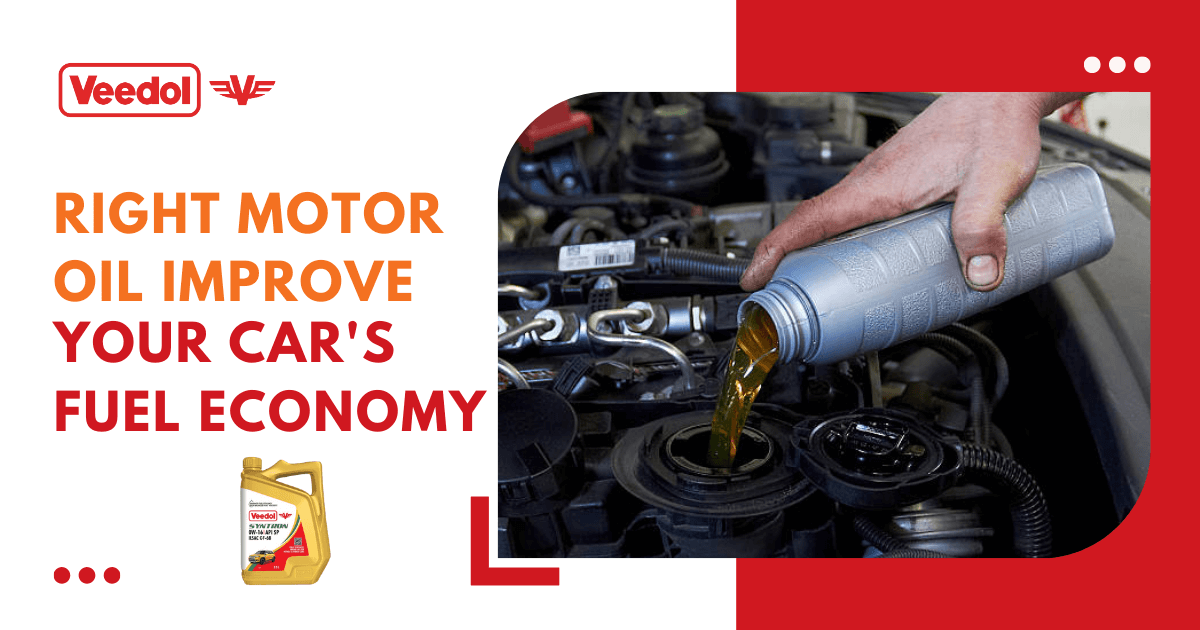
When it comes to the smooth running of your car, the selection of the right engine oil plays a key role. The type of car engine oil you use not only affects the performance of the engine but also has a significant impact on fuel economy. Drivers sometimes find it difficult to find the right oil as every type of car engine oil is not made for all engines, so choosing the oil with the right viscosity is important. This blog aims to inform you about how to choose the right engine oil that can improve your car’s fuel economy.
How Does Car Engine Oil Impact the Fuel Economy?
Reduces Friction
Choosing engine oil with low viscosity reduces friction in the engine, as the oil flows smoothly through the engine. This enables the engine to minimize metal-to-metal contact thus working efficiently and eventually decreasing fuel consumption while still protecting the engine from wear and tear.
Prevents Buildup of Sludge
Clean oil prevents the buildup of sludge that can lead to clogging of air filters and narrow oil passages in your engine. Without optimum oil flow between the engine’s components, the vehicle’s performance decreases, and fuel consumption increases.
Maintains Temperature Inside the Engine
Metal components of the engine such as connecting rods, pistons and valves play a critical role in the engine’s operation. These parts are not directly related to the coolant system, which is why engine oil with low temperature is essential for easy cold start and preventing wear, eventually leading to more fuel consumption.
How To Choose The Right Engine Oil?
The selection of the right engine oil is crucial for the engine’s health. Using the wrong engine oil can lead to more fuel consumption as it affects the piston and other movable parts of the engine, limiting their movement. This puts pressure on the engine and eventually ends up consuming more fuel than required, thus impacting fuel economy.
The first and foremost thing you must know about your car is its manufacturing details, the type of engine and the car’s manual. Other than that, factors such as viscosity, type of engine oil, OEM specifications and certifications can make a difference. So, let’s understand each of these so you can purchase the right oil to improve the fuel economy of the car.
Viscosity
Viscosity is the measure of an oil's resistance to flow. The viscosity of the oil is an important factor to consider as it represents the speed of oil that will flow through the engine at different temperatures. For instance, in Veedol’s Syntron 4W-40 (Fully Synthetic) oil, the viscosity is 4W-40. The numbers represent the temperature, and the nomenclature “W” stands for winter. For this engine oil, the first number represents its flowability in cold conditions, while the second indicates its performance in high temperatures (5°C to 40°C).
Choosing the right viscosity depends on your climate, driving conditions and the manufacturer's recommendations. Modern engines have tighter tolerances, demanding lower viscosity oils for better fuel efficiency and protection. However, if you live in a hotter climate, a slightly higher viscosity might be preferable to maintain proper engine lubrication.
Driving Environment
Engine oils are available in various types and engine oil manufacturers provide engine oil in different segments, including premium, professional and performance. To find the best oil that suits your engine’s requirements, you must consider the driving environment. Whether you live in a cold or hot climate, typically use paved or unpaved roads and the traffic conditions you drive in.
Considering these factors will allow you to decide the right engine oil for your vehicle. For better efficiency of the vehicle, synthetic oil is mostly considered. Synthetic oils are chemically engineered oils that offer superior lubrication, thermal stability and longevity. They are produced to offer the best protection to the engine’s components, preventing wear and tear caused by braking and acceleration. If you live in Tier-I or Tier-II cities with high traffic, it is better to go for synthetic oil as it leads to lesser production of sludge.
Oil Standard
If you take a look at the labels, you will find that engine oil comes with numerous acronyms such as API, ACEA, and ILSAC. These acronyms indicate that the products meet or exceed the requirements of these institutes. The specifications are important factors to consider as they indicate the performance and quality of the engine oil. Understanding the label can help you determine which engine oil will have better fuel economy than others. Here are some essential terms that you must know to understand the oil standard.
- API (SP, SN, SN Plus, SL): This is a standard set by the American Petroleum Institute to classify motor oil based on performance. For this certification, the engine oil has to comply with the standards set by the Society of Automotive Engineers (SAE) oil viscosity standards.
- ACEA: The European Automobile Manufacturer’s Association has 14 major truck, car, van and bus manufacturers. They check on factors such as carbon emission, safety and reliability of the engines.
- ILSAC: ILSAC stands for The International Lubricants Standardization and Approval Committee, formed in 1992 to define the needs and parameters of lubricant oil. It helps measure the fuel economy of the engine oil.
Veedol - The Professional Choice For Car’s Engine
The low-viscosity, synthetic formulation allows the engine oil to pass through each component of an engine with ease, leading to better lubrication and enhancing the health of the engine. As the engines require low energy to pump, they enhance the efficiency of the engine and improve fuel economy. Choosing the right car engine oil is an important factor you must consider.
Therefore, before purchasing Veedol’s car engine oil, make sure you have carefully read the manufacturer’s guidelines and consulted a mechanic. Veedol’s range of car engine oil is recommended for all new generation cars manufactured by Honda, Mercedes Benz, BMW, Skoda, Volkswagen, Chevrolet, Tata, Nissan, Renault, Fiat and Maruti Suzuki.
Also Read - 5 Signs Your Two-Wheeler Needs Engine Oil Change