

Different Types of Grease and How to Choose the Right One
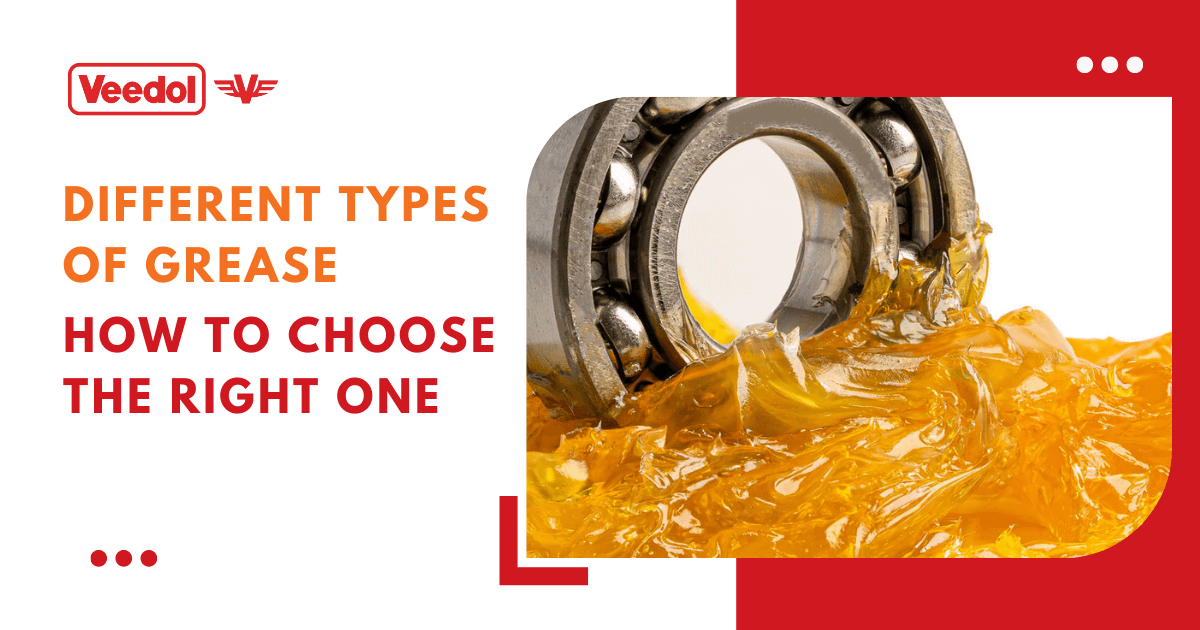
Grease plays an important role in maximizing the performance of your application. It remains in contact and lubricates moving parts without leaking out in the force of gravity. It is added to the machinery and engine components to retain the properties under shear forces at all temperatures.
Used in multiple applications, grease comes in various types, however needless to say, each comes with their own application purposes. Their individual properties define their purpose.
This is why, if you are heading out to purchase one to fulfil your requirements, you must figure out the purpose, and then choose the grease. With multiple factors influencing the performance of grease, it's time to delve deeper into the details and help guide you through the process of purchasing the perfect one for your needs.
What is grease?
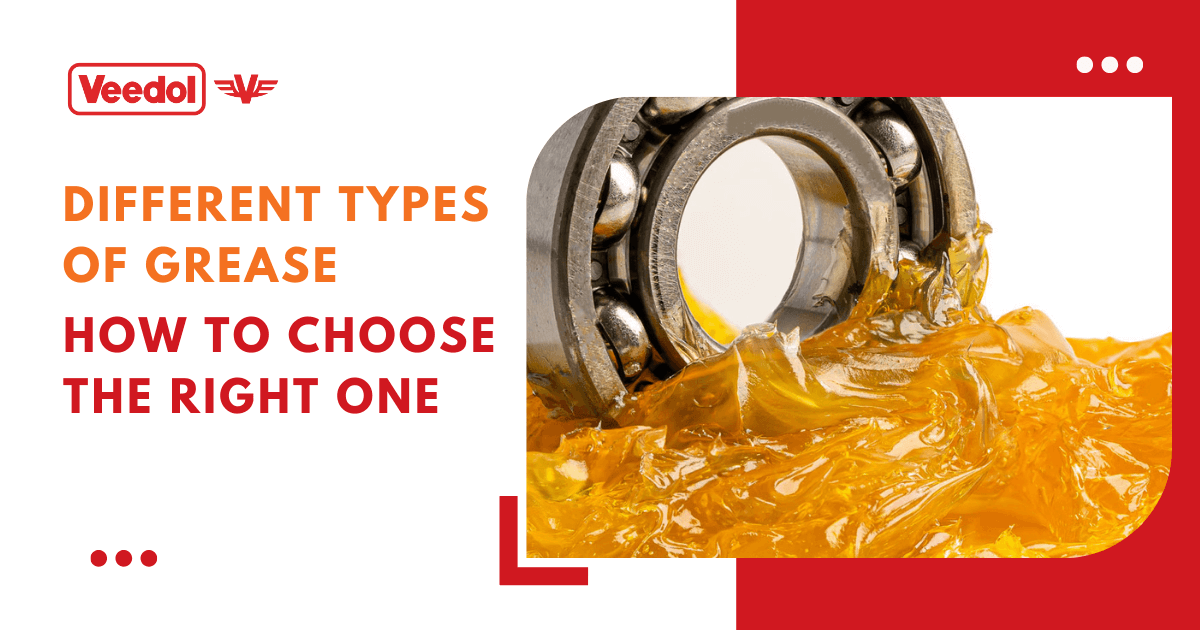
Grease is a type of lubricant that typically exists in a solid or semi-solid state. It is produced by blending thickening agents into a liquid base. In simple terms, grease is created by a mixture of base oil, industrial soap, and additives that keep the gears turning, bearings gliding and parts working smoothly.
Thickening Agent (5% to 20%): Grease contains a thickening agent, which is responsible for giving it a semi-solid or solid consistency. This agent is added in a proportion ranging from 5% to 20% of the total composition.
Base Oils (80% to 95%): The bulk of grease is made up of base oils, constituting approximately 80% to 95% of the formulation. These base oils provide lubricating properties to the grease, allowing it to effectively reduce friction between surfaces.
Additives (0% to 10%): Additives are supplementary components incorporated into the grease composition, making up about 0% to 10% of the mixture. These additives can enhance various properties of the grease, such as its stability, performance under extreme conditions and resistance to corrosion.
Types of Greases and Their Uses
Lithium Complex Grease
Lithium grease is one of the most commonly used grease additives accounting for 75% of all lubrication applications across all industries. Lithium grease is made by reacting lithium hydroxide with fatty acids. It is highly viscous and has a durable grease. It improves anti-friction and load-carrying performances. This type of grease is good for lubrication in metal-to-metal applications.
Calcium Based Grease
Calcium-based grease is one of the first greases that was manufactured for general applications. The properties of calcium grease consist of high resistance to water washouts, making it highly suitable for resisting rust and corrosion. This grease is not suitable for high-temperature applications which makes it suitable for marine industry, agricultural machinery and industrial applications.
Aluminium Complex Grease
Aluminium Complex grease has a high affinity for metal and is highly stable while working in high temperatures, close to 180 degrees Celsius. This grease not only has an impressive water-resistant property but also prevents rust and oxidation, making it a suitable choice for the food industry and greasing bearings.
How to Choose the Right Grease?
Understanding the need and right method for the selection of grease can go a long way as it can improve the lubrication programs and reliability of lubricated materials. Let’s walk you through the selection process.
Base Oil Viscosity
In the selection of any lubricant viscosity is an important consideration. One of the common mistakes a lot of people make is they confuse the grease consistency with the viscosity of the base oil. As majority of the lubricant application is in application to the bearings, one must consider the base oil viscosity for the right selection. Although there are several ways to determine the base oil viscosity, we've made this task easier for you. Read the technical detail information mentioned in our products to check the viscosity of base oil along with the test method and operating temperature.
Consistency of the Grease
The consistency of the base oil is determined by the thickener concentration. This is controlled by the thickener type and the viscosity of the base oil. NGLI is the scale for measuring the consistency of the grease which ranges from grade (000) to 6 (block grease). The most common recommended NGLI ranges from 2 to 3. This should be selected based on the performance requirements and the compatibility with the component. Remember, as a rule of thumb, always choose a grease with higher NGLI for applications with higher speed.
Performance of the Grease
While choosing the grease, make sure you ensure the performance of the grease is compatible with your requirements. For this, ensure you check the technical specifications such as dropping point, soap type, texture and EP of the grease.
The dropping point of lubricant is the temperature at which the grease is liquified and does not perform. So, while selecting grease, you must choose the one that has a higher dropping point, as it will ensure better productivity in the long run. EP stands for “Extreme Pressure”, it is found in most greases, which means it can be used for most applications except electric motor bearings. You can check the value of EP to know how much pressure it can bear and for how long.
Choose The Professional’s Choice with Veedol
Greases are part of industries and automobiles to enhance life and performance. The choice is defined by numerous factors, be it choosing the type of grease or just considering a few factors. Veedol produces a range of greases that account for all the parameters to enhance efficiency and provide lubrication. Check out our greases and the technical details to find the right one for your needs.